Which of the Following Statements About the Effect of Economic Stress on Families Is Correct?
Introduction
On 30th of January 2020, WHO declared a Public Wellness Emergency of International Concern later on the offset clusters of people infected by COVID-19 were diagnosed in Prc (WHO, 2020). The day afterward, the Italian Authorities started to define the get-go containment measures, such as checking people entering the country from China, in order to forestall the expansion of the contagion in the country (Government, 2020). However, from the second half of February the number of Italian cases increased, especially in Northern Italy. This led the Government to denote on February 21st the first restrictive measures in what was defined as the first Ruby Zone, including defined territories in the regions of Lombardia and Veneto, the areas most affected past the infection. Since the pandemic kept spreading around the state, the Prime Minister issued on March 9th a decree which extended to the unabridged national territory the restrictions already in force locally. The rules were supposed to final until April third, but were extended by two more decrees firstly until April 13th and, later, until May 3rd (Regime, 2020). At the time of writing (April 26th, 2020), there were in Italy 199,000 confirmed cases and 26,977 deaths, more than than half of which occurred merely in Lombardia and Veneto. When the data of the nowadays study were nerveless (between the 2d and the 7th of April), those numbers were still increasing, showing that the end of the pandemic is withal a long way off.
The measures, known as #Iamstayingathome (#IoRestoaCasa), include the closure of shops, except those selling crucial necessities, the cancellation of all sports events, and the shutdown of schools and universities across the land (Authorities, 2020). With schools, all the educative supporting services directed to children of all ages were closed, with teachers from main course onwards providing online lectures. Quarantine began for the unabridged population; everyone was banned from leaving home except for non-deferrable and proven work or wellness reasons, or other urgent matters. Smart working has been incentivized, just since almost activities are closed many people lost their chore or went through a severe reduction of their income.
The life condition of families suddenly and securely changed. In the abode environment, the educational office of parents for children has become even much crucial than before. Children take merely their parents around them, to provide support with homework when necessary and promote a positive development and new learning experiences for toddlers and preschoolers (Wang et al., 2020). Parents have been left alone not only in taking care of home-schooling their children, just as well in general in the management of their children and of the dwelling house surround. All other educational services are closed, babysitters and grandparents are not available, and contact with peers is not allowed. Many parents also must practice smart-working, and handling fourth dimension and spaces to work with children around may be very problematic. Though quarantine means that time that tin be shared with loved ones has increased, information technology also poses a major brunt on parents' shoulders, every bit they are called to have an educational role while likewise trying to alive their own lives and go on with their everyday chore commitments. This situation has significantly increased the risk of experiencing stress and negative emotions in parents, with a potentially cascading event on children'southward wellbeing (Sprang and Silman, 2013).
Hence, despite its positive consequence in reducing the number of new infected cases, the mobility restriction and social isolation associated with quarantine are major concerns for families' psychological wellbeing. Related to this, the wellness care situation of the land is delicate, calling for attention. Hospitals are overcrowded, and the number of deaths is still increasing, every bit well as the number of infected people and those recovering in hospitals (Government, 2020). It is becoming very common to know at least one person who tested positive to COVID-xix or was hospitalized, and, most regretfully, to have experienced the loss of a person due to COVID-xix. This might generate fright and preoccupation in parents and children, even for families who practise not have to face health problems (Liu et al., 2020). Literature concerning previous experiences all over the world that may have some aspects in common with the COVID-19 state of affairs reported a high presence of psychological distress such as depression, stress, irritability, and mail-traumatic stress symptoms associated with quarantine (Hawryluck et al., 2004; Brooks et al., 2020) with long-lasting effects continuing for years subsequently the event (Liu et al., 2012).
The majority of studies conducted during previous pandemics and from the beginning of the COVID-xix outbreak examined psychological consequences on the general population, leaving the written report of effects on parents and children mainly unexplored, with few exceptions (Brooks et al., 2020). I study found that levels of post-traumatic stress were four times higher in children who had been quarantined than in those who were non (Sprang and Silman, 2013). A preliminary written report conducted in China reported the presence of psychological difficulties in children during the COVID-19 pandemic, with fright, clinging, inattention, and irritability as the most severe symptoms for younger children (Jiao et al., 2020). All the same, mechanisms that might explain what specific COVID-19 related risk factors put children more than at take a chance of negative outcomes, and what is the interplay betwixt COVID-19 lockdown and parents' wellbeing on children's adjustment, accept not been investigated yet. A deeper understanding of family processes, protective factors, and risk factors in the abode environment might be of import if the wellbeing of children is to be promoted in these difficult times (Wang et al., 2020).
The present study wants to shed calorie-free on families' well-beingness during the COVID-xix outbreak in Italy, by exploring parents' and children'south individual and dyadic aligning subsequently 1 month of quarantine. Understanding parents' and children's reactions and emotions, and identifying risk and protective factors, is essential to properly accost their needs to tailor nowadays and time to come intervention programs (Sprang and Silman, 2013).
In full general, little is known nigh which factors may be associated with protection against child behavioral and emotional problems during a health emergency. In order to fill this gap, the main aim of the present study was to explore how pandemic-related variables, structural aspects of the home and family environs, and parental subjective experience of stress and aligning to the quarantine, affect the wellbeing of parents and children, and how in plow the well-being of parents and children are associated. Specifically, we explored both individual parent stress and dyadic perception of stress since it is well-know that both levels of stress may impair children's well-being (Belsky, 1984; Abidin, 1992; Madigan et al., 2018; Martin et al., 2019). We expected that implications of the COVID-19 outbreak might increase parents' psychological difficulties, particularly stress both at the individual and the dyadic level, with a consequent negative impact on children's emotional and behavioral well-being (Dalton et al., 2020).
Methods
Study Design and Participants
Parents filled out an anonymous online survey, afterwards reading the written consent form and explicitly like-minded to take part in the report. The survey was shared via social media for a limited time (from April 2nd to 7th, 2020), targeting parents of children aged 2- to fourteen-years-one-time. In the instance of multiple children, the parent was asked to written report on 1 child but. All the questionnaires, both parent- and child-related, were completed past the parent. There was no monetary compensation for participating. The final sample providing information on all written report variables consisted of 854 parents living in Italia, of which 797 were mothers (Mage = 38.96(6.02) (49% of whom had a loftier school caste or less, 37% a bachelor's or primary degree, and 21% a college education degree) and 57 were fathers (Yardage = 41.ix(half dozen.75) (41% of whom had a high schoolhouse degree or less, 33% a bachelor's or master degree, and 26% a college education degree). Children's mean age was 7.xiv (3.38); 427 were boys. A total of 271 parents were resident in the north of Italia where almost COVID-19 cases, were registered i.e., Lombardia and Veneto (from at present on divers as the Red Expanse). Data reported in this study are office of a wider longitudinal research project designed with multiple purposes related to the investigation of the psychological impact of the COVID-19 outbreak in Italian parents and children. The study was approved by the ethical delivery of the Section and was conducted according to the American Psychological Association guidelines in accordance with the 1964 Helsinki Declaration.
Measures
COVID-Contact Risk Alphabetize
An advertising-hoc alphabetize was computed to evaluate the amount of contact the parent had with people directly affected by the virus, following the assumption that the greater the number of contacts, and the closer the people affected by COVID-19 that the parent knows are to the parent, the greater the impact on psychological wellbeing would be. I indicate was given for each of the following if nowadays: the parents tested positive for the virus, a familiar or close friend tested positive, a familiar/shut friend was hospitalized, a familiar/shut friend died. A half=point each was given if the parent knew a person (not familiar or close friend) who tested positive, was hospitalized, or died.
Dwelling Environment Adventure Alphabetize
An ad-hoc risk index was computed to evaluate the firm and family unit situation, including factors supposed to be related to the quality of life condition. One point was given for each of the post-obit: loss of job due to the pandemic, absence of external spaces (balustrade or garden), total family income less than 1250 € per calendar month, only one adult in the house in charge of the child, no Wi-Fi, no pets. To compute the index, this score was summed with the number of rooms/number of people ratio in the business firm.
Quarantine Parent Adventure Index
Difficulties experienced past parents during the quarantine were investigated with a newly developed pool of 13 items. Parents were asked to indicate, using a 7-point Likert scale, how hard they were perceiving, during the last week, dealing with several aspects related to the quarantine such equally finding a relaxing infinite alone to unplug, time for the partner and for kids, and to do activities such as sport, reading, cooking, etc. (see Appendix 1 for the full listing of items). Cronbach'south alpha was 0.84, with 95% CIs [0.83–0.84].
Parent's Dyadic Parenting Stress
Perception of parent's stress in the parent-child interaction was investigated using the 15 items Parent/Child Dysfunctional interaction domain of the Parenting-Stress Index Brusk Class (PSI) (Abidin, 1995). The scale investigates with a 5-point rating scale the extent of parents' agreement or disagreement with statements describing the parent–child relationship as hard to manage. Cronbach's alpha in the current study was 0.86, 95% CIs [0.86–0.86].
Parent's Individual Stress
Parent's private perception of stress was investigated using the 7 items from the Stress subscale of the Low Anxiety Stress Calibration–Short course (DASS) (Lovibond and Lovibond, 1995). The calibration provides on a five-point rating scale a measure of individual symptoms indicating stress i.e., irritation and agitation. To obtain the full score, items are summed. Cronbach's blastoff in the current report was 0.88, 90% CIs [0.88–0.89].
Children's Psychological Issues
Behavioral and psychological problems in children were investigated using the parent-report form of the Strengths and Difficulties Questionnaire (SDQ) (Goodman, 2001). The current report focuses specifically on the following subscales: emotional symptoms, hyperactivity-inattention, and deport problems. Each subscale is measured by 5 items, rated on a 3-betoken calibration. To obtain the total scores, items are summed. Cronbach's alpha in the current written report were equally follow: 0.64 for the emotional symptoms calibration (ninety% CIs [0.62–0.66]), 0.73 for the hyperactivity-inattention scale (90% CIs [0.72–0.75]), and 0.53 (90% CIs [0.51–0.55]) for the conduct bug scale. Values were comparable to those reported in the Italian evaluation of the SDQ (Tobia and Marzocchi, 2018).
Analytic Programme
Commencement, descriptive statistics and bivariate correlations amidst study variables were presented. Afterward, two multivariate mediation models were tested, including equally a predictor relevant quarantine-related risk factors (derived from the correlational analysis), as a mediator parents' stress (in 1 model dyadic parenting stress was explored as the candidate mediator, in the other model it was private stress) and as outcomes children's psychological problems at the SDQ. Mediation models were compared with a with a null model and a main effect model, including only quarantine-related chance factors as the predictor. Akaike weights, providing the probability of a model to support new data provisional on the set of models considered, were used for model comparison (Wagenmakers and Farrell, 2004). Parameters were investigated for the all-time plumbing equipment model. Finally, as a follow-up assay, nosotros explored whether results were comparable distinguishing betwixt parents' living in the Red Area (including Lombardia and Veneto regions) with the rest of the sample. To this aim, we performed a multi-grouping analysis. Analyses were run using the statistical software R (Team, 2018), lavaan package (Rosseel, 2012). Plots were depicted using package ggplot2.
Results
Descriptive Statistics
Means, SDs, and correlation values amidst variables of interest are reported in Table 1. Due to the big sample size, correlation values above 0.06 (i.e., trivial in consequence size) were significant at p < 0.05; thus, for interpreting effects, we considered the strength of the association (namely Pearson'due south r) as an effect size. Results showed that overall at that place were no relevant associations of COVID-contact take a chance index and Home environment risk index with dyadic parenting stress (PSI), parent's individual stress (DASS), and children'southward psychological problems (SDQ).
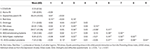
Table ane. Descriptive and bivariate correlations.
Multivariate Regression Models
Because the only hazard factor associated with parent's individual and dyadic stress and children's psychological problems was the Quarantine parent chance alphabetize, we did not include in the model the Dwelling and COVID take a chance indices. Thus, models tested had every bit a predictor the Quarantine parent risk index, as the candidate mediator parent stress (dyadic and private), and equally outcomes children's emotional and behavioral issues.
For both the model including dyadic parenting stress equally a mediator and private stress as a mediator, the arbitration model outperformed the null and chief-result regression model. Specifically, for the model including dyadic parenting stress as a mediator, Akaike weights were lower than 0.001 for both the null and the main result model, and very close to i.00 for the mediation model. The same weights were obtained for the comparing with the mediation model including individual stress. Standardized estimates of the 2 mediation models are reported in Figures i, 2. Parameters for indirect effects and proportion of variance explained for each outcome variable for the investigated models are reported in Tabular array ii.
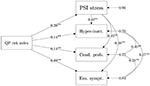
Figure 1. Multivariate mediation model, including dyadic parenting stress (PSI stress) equally a mediator. QP risk index, Quarantine parent take a chance alphabetize. **p < 0.01.
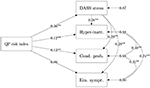
Figure 2. Multivariate mediation model, including individual parent stress (DASS stress) as a mediator. QP risk index, Quarantine parent risk index. **p < 0.01.
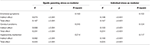
Tabular array 2. Divers parameters.
Follow-Upwardly Analyses
Considering of the significant association between report variables and age, we ran the analyses over again, including the effect of the child's age on the mediator and outcome variables. Results remained stable overall. With a multi-group analysis, we finally explored whether results were comparable for residents in the Red Area (Lombardia and Veneto) vs. other regions. No relevant differences were identified. Results are available upon request to the corresponding author.
Discussion
The COVID-xix outbreak is a completely new and unexpected situation currently affecting many countries. Italy was, after Mainland china, the 2d nearly highly affected state at the time, with the pandemic spreading very fast. In simply a few weeks, the population plant itself from thinking that the pandemic was happening far abroad, to being directly involved (Authorities, 2020). The closure of schools and the determination to continue children locked at home was obvious, but the consequences of all this for families' well-beingness were barely considered.
Our study is the starting time to examine the bear on of the COVID-nineteen outbreak on parents' and children's wellbeing. We explored bivariate associations amidst the environment, family, and COVID-19 outbreak-related factors on parents' stress and children'south psychological issues, and the interplay amid these variables. Results showed that factors such as living in a more at-risk contagion zone or being in closer contact with the virus' effects practise not relevantly touch parents' and children's well-being. This confirms findings from a preliminary study in China, where the difference in children's symptoms between areas identified past dissimilar levels of epidemic risk was not statistically significant (Jiao et al., 2020). Similarly, the quality of the environment, such as the concrete characteristics of the living infinite, is not associated with parents' and children's psychological symptoms. Yet, it is the parents' individual perception of the situation, and more specifically how difficult they find it dealing with the many stresses the quarantine imposes, that is significantly associated with parent'southward stress and children's psychological issues, and that indirectly impacts on children'southward behavioral and emotional problems through the mediating role of parent's stress. Parents who report finding taking care of their children's learning, finding infinite and fourth dimension for themselves, the partner, the children, and for the activities they used to do earlier the lockdown more difficult, are more stressed. This confirms studies that constitute an effect of the limitations associated with quarantine on the well-beingness of adults (Brooks et al., 2020). We further add to the literature that this stress is experienced both at the individual (e.g., being over-reactive, feeling nervous and irritated) and at the dyadic level (e.g., finding information technology hard to enjoy interactions with the kid, and child behavioral and emotional expressions). In addition, nosotros pointed out that it is this stress that significantly impacts on children's well-existence. Hence, information technology is mainly when the strains of quarantine affect the ability of the parent to enjoy and capeesh the parent-child relational feel that the consequential negative touch on on the kid's well-existence is stronger, a effect with of import implications for informing intervention programs that target the family and the kid. Moreover, this impact is present at every age, even though our historic period range is quite broad. This underlines that the bear on of the lockdown on parents and children is nowadays with similar mechanisms for families with children younger than 14 years.
The effect we identified in our study may be explained in many ways. More than stressed parents find it more difficult to understand their child's needs and to respond in a sensitive way (Abidin, 1992; Scaramella et al., 2008). Stress is oft associated with rude behaviors and difficulties in explaining limits and subject. Thus, children in these families may feel less understood past their parents and may react in more negative and aggressive ways (Pinquart, 2017). Moreover, we know that children have lower personal resources to bargain with the many changes the pandemic is imposing on their life (Liu et al., 2020) and guidelines suggest parents should discuss and explicate the situation with them, since correct information nearly what is happening and the reasons for the restrictions children have to face is crucial to foreclose negative psychological consequences (Dalton et al., 2020). Notwithstanding, how and when to practise that is completely left upwards to the parents' pick. We can speculate that more stressed parents may be too overwhelmed by the situation to detect advisable ways to be a supportive effigy for their children and to find the best means to address children's questions and fears (DiGiovanni et al., 2004). When children do non observe responsive answers to their preoccupations from adults, they may show more distress, evidenced past more emotional and behavioral problems also as inattention and difficulties in concentrating.
These results suggest many interesting implications that should be addressed in the present and in the time to come in Italy, and in all countries involved in the pandemic, if nosotros want to promote children's wellbeing, and prevent the onset of more than severe behavioral and emotional problems. The pandemic and the quarantine associated with it require using personal resource to deal with everyday life and fears and worries. Correct data and guidelines accept to exist given to adults about how this stressful situation may affect their personal and children's wellbeing. Public health should provide parents with knowledge almost, for instance, how children at different ages express distress and the importance of sharing and talking about fears and negative emotions (Dalton et al., 2020). In this style even less resilient and more stressed parents may exist helped in finding ways to sympathize and support their children (Belsky, 1984).
The closure of schools may have also contributed to this phenomenon. Firstly, because parents are left alone dealing with their children'due south teaching and learning, this may be a very challenging duty. Moreover, teachers accept a role not only in delivering educational materials but besides in offering an opportunity for children to interact, and to receive from them back up and explanations. Organizing online courses in a style to likewise improve the possibility for children to interact with their teacher virtually things outside of the learning context should exist a priority especially if schoolhouse closures are to be prolonged. Moreover, the Government should take into consideration the impact of school closures on parents by finding ways to help them deal with the learning experience of children and with having children at home 24/7, while parents as well have to manage domicile-working and childcare. This is going to be even more than relevant if, during the 2d stage of the emergency, job activities volition re-open up, and parents will exist asked to go dorsum to work, but schools will be kept closed. How are parents supposed to deal with this?
Some limitations of the present study should be addressed. Firstly, this is a correlational study; a longitudinal exploration of the furnishings of quarantine on parents and the cascading effects on children over time would help in better understanding the miracle. Moreover, we have nerveless children'south psychological symptoms from parent reports; although this information drove method is widely used it may be less informant than child reports or direct evaluation of children's well-being fabricated by experts. Lastly, we may wait that quarantine risk is college for more at-risk families i.e., families of separated parents, families with children with disabilities, very poor families, etc. The exploration of the miracle with those in at-risk situations would help in developing more tailored interventions.
If properly supported by healthcare professionals and other social connections, including the school environment, parents and children tin appropriately overcome this disquisitional period of distress and avoid astringent long-term consequences. Quarantine and social distancing are efficient means to deal with the pandemic, but these experiences may accept consequences on people's well-existence. Yet, the media and public institutions concentrate primarily on physical health to recommend steps for the prevention and containment of the disease, leaving the impact on mental health undiscussed. Indeed, stable mental wellness is one of the keys to fight this ongoing pandemic and to restore a post-pandemic society; the well-beingness of parents and children must be under surveillance since issues on this side may accept long-lasting implications.
As Bowlby suggested thirty years ago, "Man and adult female ability devoted to the production of material appurtenances counts a plus in all our economic indices. Man and woman power devoted to the production of happy, salubrious, and self-reliant children in their ain homes does not count at all. We take created a topsy-turvy earth" (Bowlby, 1988).
Data Availability Statement
The raw information supporting the conclusions of this article will be fabricated available by the authors, without undue reservation.
Ethics Statement
The studies involving human participants were reviewed and approved by Department of Neuroscience, Imaging and Clinical Sciences. The patients/participants provided their written informed consent to participate in this study.
Author Contributions
MS, FL, and MF conceptualized the report and organized the data collection. MS and FL wrote the outset draft of the manuscript. FL and MP run the analyses and wrote the results section. All authors contributed to revision of the concluding version of the manuscript.
Conflict of Interest
The authors declare that the research was conducted in the absence of any commercial or financial relationships that could be construed as a potential conflict of involvement.
Abbreviations
SDQ, Strengths and Difficulties Questionnaire; PSI, Parenting Stress Index Brusque form.
References
Abidin, R. R. (1992). The determinants of parenting behavior. J. Clin. Child Psychol. 21, 407–412. doi: 10.1207/s15374424jccp2104_12
CrossRef Total Text | Google Scholar
Abidin, R. R. (1995). The Parenting Stress Alphabetize Professional Manual. Odessa, FL: Psychological Assessment Resources.
PubMed Abstract | Google Scholar
Bowlby, J. (1988). A Secure Base: Parent-Child Attachment and Healty Human Evolution. London: Routledge.
Brooks, South. M., Webster, R. K., Smith, L. E., Woodland, L., Wessely, Due south., Greenberg, Northward., et al. (2020). The psychological impact of quarantine and how to reduce information technology: rapid review of the show. Lancet 395, 912–920. doi: 10.1016/S0140-6736(twenty)30460-8
PubMed Abstract | CrossRef Total Text | Google Scholar
Dalton, Fifty., Rapa, E., and Stein, A. (2020). Protecting the psychological health of children through constructive advice near COVID-19. Lancet Child Adolesc. Health iv:346–347.doi: 10.1016/S2352-4642(xx)30097-iii
PubMed Abstract | CrossRef Full Text | Google Scholar
DiGiovanni, C., Conley, J., Chiu, D., and Zaborski, J. (2004). Factors influencing compliance with quarantine in Toronto during the 2003 SARS outbreak. Biosecur. Bioterror. 2, 265–272. doi: 10.1089/bsp.2004.2.265
PubMed Abstruse | CrossRef Full Text | Google Scholar
Goodman, R. (2001). Psychometric backdrop of the strengths and difficulties questionnaire. J. Am. Acad. Child Adolesc. Psychiatry 40, 1337–1345. doi: x.1097/00004583-200111000-00015
PubMed Abstruse | CrossRef Full Text | Google Scholar
Government (2020). Italian Regime: Measures to Face the Coronavirus Covid-xix. Retrieved from: http://www.governo.information technology/it/coronavirus (accessed Apr xvi, 2020).
Hawryluck, L., Golden, W. L., Robinson, S., Pogorski, South., Galea, S., and Styra, R. (2004). SARS control and psychological furnishings of quarantine, Toronto, Canada. Emerging Infect. Dis. 10, 1206–1212. doi: 10.3201/eid1007.030703
CrossRef Full Text | Google Scholar
Jiao, Due west. Y., Wang, L. North., Liu, J., Fang, South. F., Jiao, F. Y., Pettoello-Mantovani, Thou., et al. (2020). Behavioral and emotional disorders in children during the COVID-19 epidemic. J. Pediatr. 221, 264–266.e1. doi: 10.1016/j.jpeds.2020.03.013
PubMed Abstract | CrossRef Full Text | Google Scholar
Liu, J. J., Bao, Y., Huang, X., Shi, J., and Lu, L. (2020). Mental health considerations for children quarantined because of COVID-19. Lancet Child Adolesc. Health 4:347–349. doi: 10.1016/S2352-4642(20)30096-ane
PubMed Abstract | CrossRef Full Text | Google Scholar
Liu, 10., Kakade, M., Fuller, C. J., Fan, B., Fang, Y., Kong, J., et al. (2012). Depression after exposure to stressful events: lessons learned from the severe acute respiratory syndrome epidemic. Compr. Psychiatry 53, 15–23. doi: 10.1016/j.comppsych.2011.02.003
PubMed Abstract | CrossRef Full Text | Google Scholar
Lovibond, S. H., and Lovibond, P. F. (1995). Manual for the Depression Anxiety Stress Scales (2d. Ed.). Sydney, NSW: Pshychology Foundation. doi: ten.1037/t01004-000
CrossRef Full Text | Google Scholar
Madigan, S., Oatley, H., Racine, Northward., Fearon, R. P., Schumacher, L., Akbari, E., et al. (2018). A meta-analysis of maternal prenatal depression and anxiety on child socioemotional development. J. Am. Acad. Child Adolesc. Psychiatry 57, 645–657. e648. doi: 10.1016/j.jaac.2018.06.012
PubMed Abstruse | CrossRef Full Text | Google Scholar
Martin, C. A., Papadopoulos, N., Rinehart, N., and Sciberras, E. (2019). Associations between child slumber problems and maternal mental health in children with ADHD. Behav. Sleep Med. 25, 1–14. doi: x.1080/15402002.2019.1696346
PubMed Abstruse | CrossRef Total Text | Google Scholar
Pinquart, M. (2017). Associations of parenting dimensions and styles with externalizing bug of children and adolescents: an updated meta-analysis. Dev. Psychol. 53, 873–932. doi: ten.1037/dev0000295
PubMed Abstract | CrossRef Full Text | Google Scholar
Rosseel, Y. (2012). Lavaan: An R package for structural equation modeling and more. Version 0.v–12 (BETA). J Stat Softw. 48, 1–36. doi: x.18637/jss.v048.i02
CrossRef Full Text | Google Scholar
Scaramella, L. V., Sohr-Preston, S. L., Callahan, Thousand. L., and Mirabile, S. P. (2008). A test of the Family Stress Model on toddler-aged children's adjustment amid Hurricane Katrina impacted and nonimpacted low-income families. J Clini Child Adolesc Psychol. 37, 530–541. doi: 10.1080/15374410802148202
PubMed Abstract | CrossRef Full Text | Google Scholar
Sprang, G., and Silman, M. (2013). Posttraumatic stress disorder in parents and youth after health-related disasters. Disaster Med. Public Wellness Prep. seven, 105–110. doi: ten.1017/dmp.2013.22
PubMed Abstract | CrossRef Full Text | Google Scholar
Squad, R. C. (2018). Bundle: splines, R: A Linguistic communication and Surroundings for Statistical Calculating. R Foundation for Statistical Calculating. Vienna.
Google Scholar
Tobia, V., and Marzocchi, Grand. 1000. (2018). The strengths and difficulties questionnaire-parents for Italian schoolhouse-aged children: psychometric backdrop and norms. Child Psychiatry Hum Dev. 49, 1–viii. doi: 10.1007/s10578-017-0723-two
PubMed Abstruse | CrossRef Full Text | Google Scholar
Wang, One thousand., Zhang, Y., Zhao, J., Zhang, J., and Jiang, F. (2020). Mitigate the effects of home confinement on children during the COVID-19 outbreak. Lancet 395, 945–947. doi: ten.1016/S0140-6736(20)30547-X
PubMed Abstract | CrossRef Full Text | Google Scholar
Source: https://www.frontiersin.org/articles/10.3389/fpsyg.2020.01713/full
0 Response to "Which of the Following Statements About the Effect of Economic Stress on Families Is Correct?"
Post a Comment